
Emergency Prep 6 min read
Hurricane Preparedness for Seniors in the Florida Panhandle
A step-by-step plan for older adults and their families before, during and after a storm.
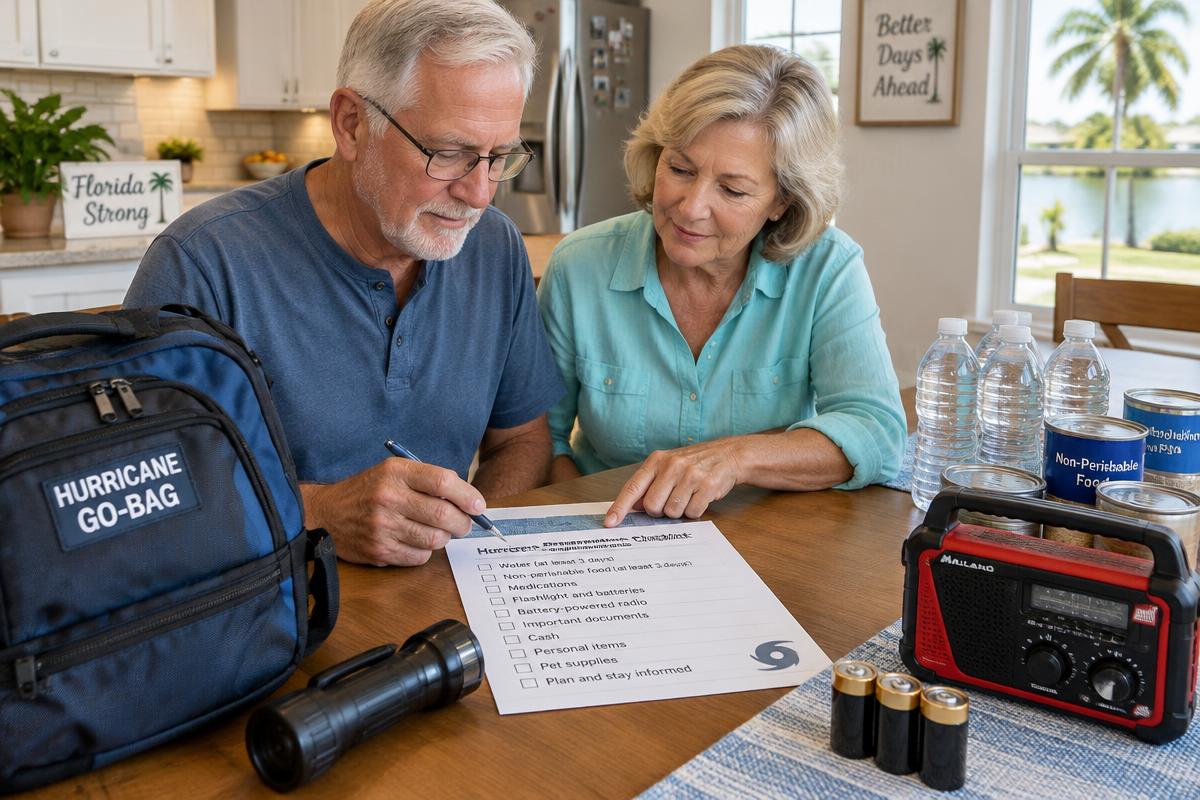
Panhandle families know how quickly a storm can change everything. For older adults — especially those who live alone or have mobility needs — planning ahead is the best protection. Hurricane season runs June 1 through November 30. The time to prepare is before a storm is in the forecast.
Make a plan
- Decide where you will go if you need to evacuate — a family member's home, a hotel inland or a shelter.
- Know your evacuation zone. Your county emergency management office can tell you.
- Choose a family contact person everyone will check in with.
- If you have special needs, register with your county's special needs shelter program ahead of time (floridadisaster.org/snr).
Build a go-kit
- Water (one gallon per person per day) and non-perishable food for at least 7 days.
- A 2-week supply of prescriptions and a written list of medicines and doses.
- Glasses, hearing aids, extra batteries and mobility aids.
- Copies of ID, insurance cards and important papers in a waterproof bag.
- Flashlight, battery or hand-crank radio, phone chargers and a power bank.
- Cash in small bills — ATMs and card readers may be down.
When a storm is coming
- Follow local officials and leave early if told to evacuate.
- Fill prescriptions, gas up the car and charge every device.
- Bring in or tie down outdoor furniture.
- Let your family contact know your plan.
After the storm
Stay away from downed power lines and flood water. Never run a generator indoors or in a garage. Check on elderly neighbors. Heat can be dangerous without power, so rest, stay hydrated and seek a cooling center if needed.
This article shares general information and is not medical, legal or financial advice. Please talk with your doctor or another qualified professional about your specific situation.